Do I Need Botox or Filler for My Wrinkles? How to Tell the Difference in Mount Holly, NC

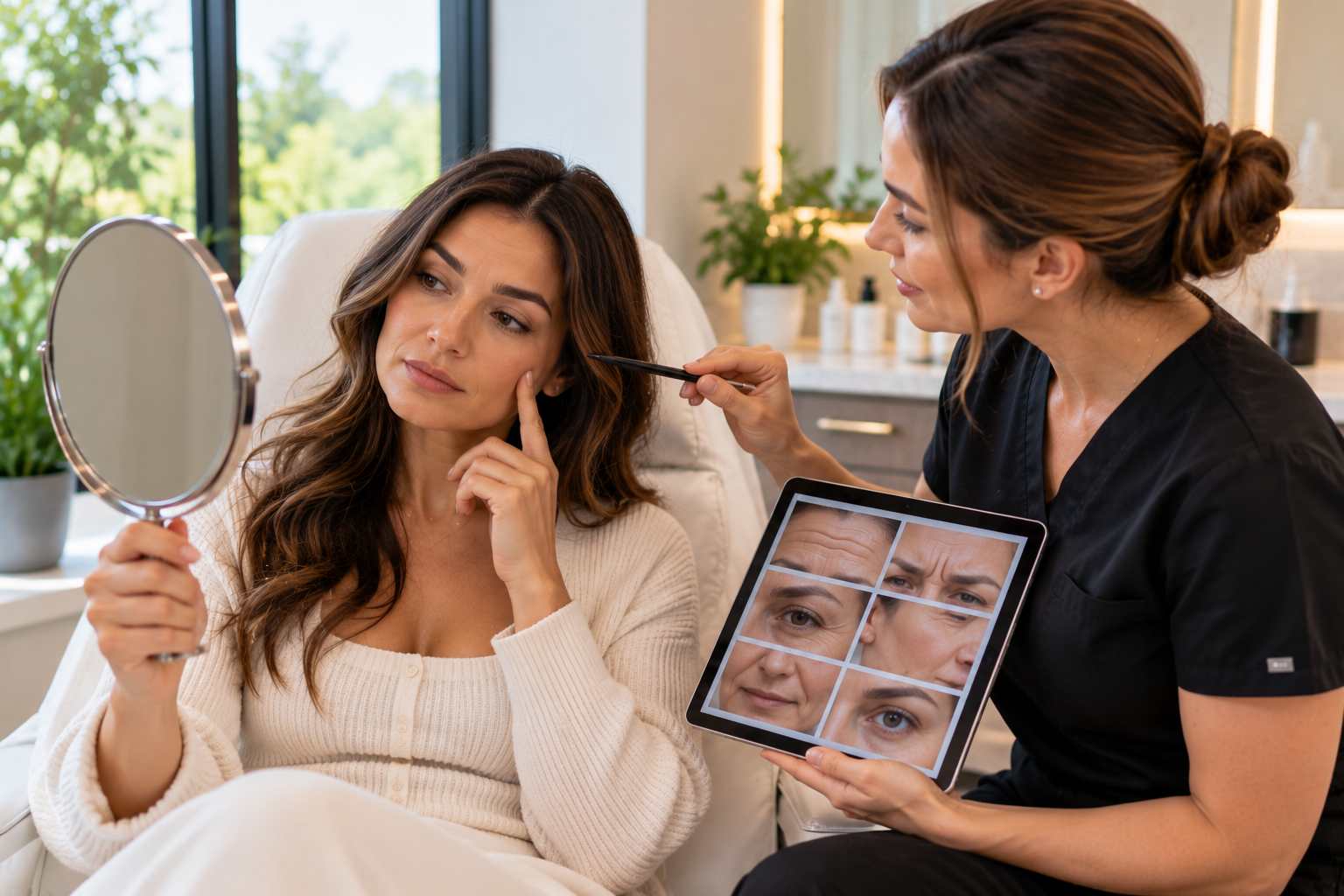
The quickest way to tell is to watch your face move. If a line appears when you frown, squint, or raise your brows and fades when your face relaxes, it is usually a movement line, and Botox is designed for that. If a line or hollow is visible even when your face is completely still, especially around the cheeks, mouth, or under the eyes, the cause is more often volume loss, and that is where dermal filler or a collagen-stimulating treatment comes in.
Many people walk into a consultation asking for one when they actually need the other, or a thoughtful combination of both. Knowing the difference helps you spend your time, energy, and investment where it will actually show.
Why Do Botox and Filler Get Confused So Often?
Both are injectable, both are used on the face, and both are often described with the same vague phrase: "wrinkle treatment." But they work in completely different ways.
What does Botox actually do?
Botox is a neuromodulator. It temporarily relaxes specific facial muscles so they cannot contract as forcefully. Less muscle movement means softer expression lines over time. At Thin Space Wellness, Botox in Mount Holly is used for frown lines, crow's feet, and forehead creases.
What does dermal filler actually do?
Dermal filler adds volume beneath the skin. The dermal filler options at Thin Space Wellness use hyaluronic acid products, including Juvéderm, Restylane, and the RHA Collection, to restore volume in areas like the cheeks, temples, lips, chin, jawline, and lines around the mouth. Filler does not stop a muscle from moving. It replaces structure that has thinned or shifted with time.
How Can You Tell Which Type of Line You Have?
Try this simple check at home in good natural light.
What is the mirror test?
- Look straight into a mirror with a relaxed face and take a photo.
- Frown, raise your eyebrows, and smile widely, then take photos of each expression.
- Compare them.
Lines that are obvious only in the expression photos are dynamic lines. Lines, folds, or shadows that show up in the relaxed photo are static lines or signs of volume loss.
What Are the Most Common Examples of Each?
Understanding whether facial changes come from muscle movement or volume loss can help you identify which treatment may be appropriate.
- Frown Lines (The "Elevens"): Vertical lines between the eyebrows typically develop from repeated muscle movement when frowning. Botox can help soften these expression lines.
- Forehead Lines: Horizontal wrinkles that appear when raising your eyebrows are caused by muscle contractions. Botox helps relax the targeted muscles and reduce their appearance.
- Crow's Feet: Fine lines that spread from the outer corners of the eyes when smiling are associated with repeated facial expressions. Botox can help smooth these lines.
- Flat or Sunken Cheeks: A loss of facial volume can make the cheeks appear flatter or hollow. Dermal fillers or Sculptra may help restore fullness and improve facial contours.
- Deep Nasolabial Folds: Pronounced lines extending from the nose to the corners of the mouth often develop from volume loss and changes in facial support. Dermal fillers may help soften their appearance.
- Under-Eye Hollows: Hollow areas beneath the eyes may result from volume loss and changes in facial anatomy. Dermal fillers may be considered for carefully selected patients following a professional assessment.
These examples provide general guidance rather than a diagnosis. Since muscle movement and volume loss often occur together, an in-person consultation is essential to determine the most appropriate treatment for your facial anatomy and aesthetic goals.
What Happens When You Choose the Wrong Treatment?
This is the part that frustrates people most, and it is usually avoidable.
Can filler fix a line caused by movement?
Not very well on its own. If a line is driven by a strong muscle, adding volume underneath it may soften the crease a bit, but the muscle keeps pulling. The result can look underwhelming, and it is not the right tool for that job.
Can Botox fix volume loss?
No. Botox relaxes muscle. It cannot replace lost fat, collagen, or bone support. Someone with hollow cheeks or deep folds around the mouth may see little improvement from Botox alone, and sometimes relaxing nearby muscles is simply the wrong strategy for that area.
Why do some people end up looking "done"?
Overtreatment usually happens when one product is asked to do the work of another. Too much filler used to chase movement lines can look heavy. Too much Botox used where structure is the real issue can look flat. Natural-looking results come from matching the treatment to the cause.
When Do People Need Both?
As we age, faces typically experience both stronger expression lines and gradual volume loss. That is why many treatment plans include more than one approach.
What does a combined plan look like?
A provider might use Botox to soften frown lines and crow's feet, then address flattened cheeks or deep folds with filler. For gradual, longer-term support, some patients consider Sculptra, a biostimulator that encourages the skin to produce its own collagen. Thin Space Wellness notes that Sculptra results can last up to two years.
For people who want the whole face considered at once, full face rejuvenation takes a global approach that looks at volume, skin quality, and balance together rather than one feature at a time.
Are there considerations when combining treatments?
Yes. Your provider will talk you through timing, sequencing, and what to expect from each. The FDA notes on its dermal filler information page that the safe use of fillers together with neuromodulators like Botox has not been evaluated in a controlled clinical study, which is one more reason to work with a licensed medical provider who will plan carefully rather than treat everything in one rushed visit.
How Should You Think About the Investment?
For clients who are used to researching every purchase, this question comes up often, and it is a fair one.
Which one lasts longer?
According to Thin Space Wellness, Botox results generally last 3 to 4 months. Most fillers last about 6 to 18 months, depending on the area and the product. Sculptra builds gradually and can last up to two years. Longevity is not the only factor, though. A treatment that lasts longer but addresses the wrong concern is not a good value.
What does a smart long-term plan look like?
For many women and high-end aesthetic clients, the most satisfying approach is a steady, personalized plan rather than one dramatic appointment. That might mean regular Botox maintenance, occasional filler where volume has changed, and attention to skin quality over time. The goal is to look like a well-rested version of yourself year after year, not to chase a new trend each season.
Why does the setting matter?
Thoughtful aesthetic work takes time. Thin Space Wellness describes its practice as a calm, boutique setting with unhurried, one-on-one visits, which gives you room to ask questions and make decisions without pressure.
What Should You Ask During a Consultation?
Bring photos of what bothers you and consider asking:
- Is this line caused by movement, volume loss, or both?
- What would you treat first, and why?
- How long should I expect results to last for my face?
- What are the possible side effects for each option?
- What would you not recommend for me?
That last question tells you a lot about a provider. A good one will happily talk you out of something you do not need.
If you are unsure whether your concern is lines or volume, you might also find it helpful to read why you might still look tired after a full night's sleep.
Frequently Asked Questions
Is Botox or filler better for forehead lines?
For lines that appear when you raise your eyebrows, Botox is usually the first option discussed because those lines are driven by muscle movement. A provider will assess whether any additional skin quality or volume concerns are also present.
Is filler or Botox better for smile lines around the mouth?
Lines from the nose to the corners of the mouth are usually related to volume loss and shifting facial support, so dermal filler is more commonly discussed for that area than Botox.
Can I get Botox and filler at the same appointment?
Some providers do, and some prefer to stage treatments. Your provider will decide based on your face, the areas involved, and what is safest for you.
Which looks more natural, Botox or filler?
Both can look natural when they are used for the right concern and in the right amount. Unnatural results usually come from overtreatment or from using one product to solve a problem it was not designed for.
How do I know if I am a good candidate for either?
A consultation in Mount Holly is the best way to find out. Your provider will review your health history, watch how your face moves, and look at your features at rest before recommending anything.
Lines or Lost Volume? Let Your Face Settle the Debate
The Botox or filler question has a simple starting point: lines that move with you usually respond to Botox, while lines and hollows that stay put usually call for volume. Most faces tell a bit of both stories, and the best results come from a plan that respects the difference.
If you are in Mount Holly, Belmont, Gastonia, or nearby Charlotte and want an honest answer about what your face actually needs, book a consultation with Thin Space Wellness. You will leave with a clear plan, not a sales pitch.